Mastering Bharatanatyam Costume Measurements at Home (Inches Guide)
Ensure a perfect fit for your classical Indian dance costume with our expert, step-by-step guide to taking accurate measurements in inches from home. Learn what each measurement controls and avoid common mistakes.
On this page
- The Foundation of a Flawless Performance: Why Measurements Matter
- Preparation is Key: Tools and Tips for Accurate Measuring
- Upper Body Measurements: Crafting Your Perfect Blouse
- Lower Body Measurements: The Grace of the Pant, Skirt, and Fan
- Special Considerations: Growing Dancers, Arangetrams, and Common Pitfalls
- From Your Home to Our Chennai Atelier: The Shanthi Tailors USA Process
- Your Journey to a Perfect Costume Starts Here
Key takeaways
- Accurate measurements are crucial for the comfort and aesthetic of your custom Bharatanatyam costume.
- Always use a flexible tailor's tape measure and have a helper for the best results.
- Each measurement directly impacts specific costume components like the blouse, pant, or fan.
- For children, consider adding a small growth allowance, especially for arangetram costumes.
- Our Chennai atelier meticulously uses your online measurements to craft your unique costume.
The Foundation of a Flawless Performance: Why Measurements Matter
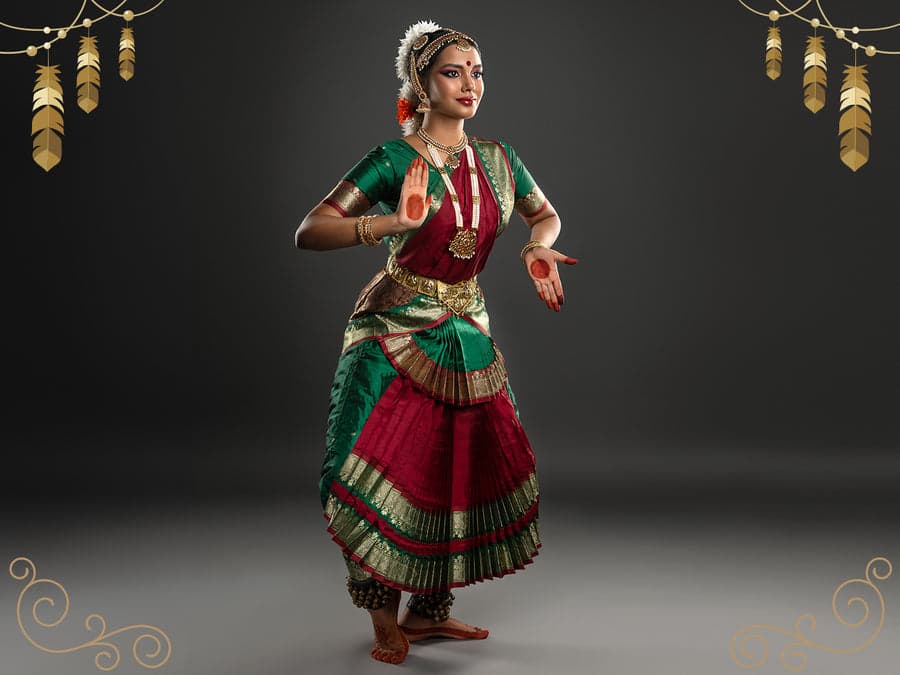
At Shanthi Tailors USA, with roots tracing back to our Chennai atelier founded in 1967, we understand that a Bharatanatyam costume is more than just fabric and embellishments – it is an extension of the dancer, enhancing every mudra and movement. For decades, we have meticulously crafted costumes for thousands of dancers, from budding artists to seasoned performers, across the globe and now, right here in the United States.
The journey to a perfectly fitting custom Bharatanatyam costume begins not in our Chennai atelier, but right in your home. Taking accurate measurements is the single most critical step to ensure your costume – whether for Bharatanatyam, Kuchipudi, Mohiniyattam, or Odissi – drapes beautifully, allows for unrestricted movement, and truly brings your dance to life on stage, from local recitals to grand arangetrams across the US. This comprehensive guide will walk you through each measurement, in inches, ensuring a seamless experience.
Preparation is Key: Tools and Tips for Accurate Measuring
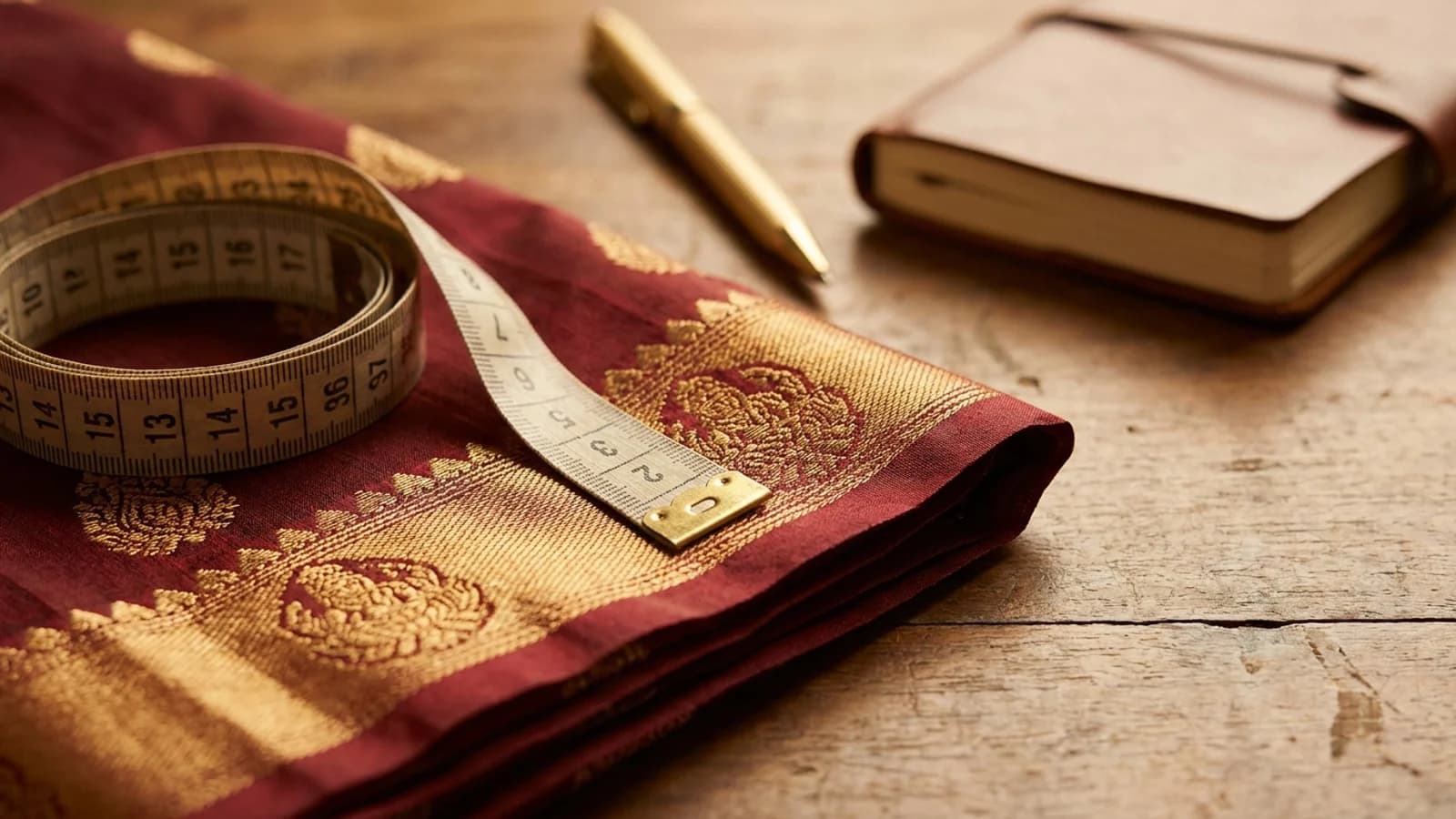
Before you begin, gather your essentials. You'll need a flexible, cloth tailor's tape measure (avoid metal construction tapes, as they don't conform well to the body's curves), a pen, and paper to record each measurement immediately. Most importantly, enlist a helper! Measuring oneself, especially for back and shoulder areas, can lead to inaccuracies. For children, a parent's steady hand is invaluable.
The dancer should wear tight-fitting clothing, such as a leotard or snug tank top and shorts, to ensure the tape measure lies directly against the body without adding bulk. Stand upright, relaxed, and breathe normally. Do not pull the tape measure too tightly, nor leave it too loose – it should be snug but not constricting. Take each measurement twice to confirm accuracy. Remember, these precise figures are what our master tailors in Chennai will use to bring your custom costume to life, a process that typically takes 30-35 working days before direct shipment to your US address.
Upper Body Measurements: Crafting Your Perfect Blouse
The Bharatanatyam blouse is a cornerstone of the costume, requiring a precise fit for both comfort and aesthetic appeal. Here’s how to measure:
- Bust: Measure around the fullest part of the bust, ensuring the tape measure is parallel to the floor, passing under the armpits and over the shoulder blades. This controls the main circumference of your blouse.
- Underbust/Ribcage: Measure directly under the bust, around the ribcage. This measurement is crucial for the lower band of the blouse, ensuring it sits securely without riding up.
- Shoulder to Bust Point: From the highest point of the shoulder (where a blouse seam would typically rest) down to the nipple. This helps determine dart placement and cup shaping.
- Shoulder to Waist: Measure from the highest point of the shoulder, over the bust, down to your natural waistline (the narrowest part of your torso). This defines the blouse length.
- Shoulder Width: Measure straight across the back, from the tip of one shoulder bone to the tip of the other. This ensures the blouse shoulders sit correctly.
- Armhole: Place the tape measure around the armpit, ensuring it's snug but not tight. This dictates the comfort and fit of the sleeve opening.
- Arm Length: From the shoulder tip down to the desired sleeve length (e.g., elbow, just above the elbow, or short sleeve).
- Bicep: Measure around the fullest part of the upper arm, with the arm relaxed. This ensures the sleeve is comfortable and not restrictive.
- Neck Depth (Front & Back): For the front, measure from the shoulder point (where the neck meets the shoulder) down to where you want the neckline to fall. For the back, measure from the same shoulder point down to the desired back neckline. These are vital for the traditional Bharatanatyam blouse design, which often features a deep back.
Our Chennai atelier meticulously uses these measurements to create a blouse that supports, flatters, and allows for complete freedom of movement during your dance.
Lower Body Measurements: The Grace of the Pant, Skirt, and Fan
The lower half of the costume – comprising the pant (pajama), skirt, and fan – is essential for defining the dancer's lines and enhancing their movements. Precision here ensures the correct drape and fit.
- Waist: Measure around the natural waistline, typically the narrowest part of the torso, above the navel. This measurement determines the top band of the pant or skirt.
- Hip: Measure around the fullest part of the hips and derriere, ensuring the tape is parallel to the floor. This is critical for the overall fit and flow of the pant and skirt.
- Thigh: Measure around the fullest part of one thigh, just below the crotch. This ensures the pant allows for ample leg movement.
- Inseam: From the crotch seam down to the desired ankle length. This is specifically for the pant length.
- Outseam/Side Seam: Measure from the natural waistline down to the desired ankle length (or floor length for a skirt). This is a crucial overall length measurement for both pants and skirts.
- Knee: Measure around the knee, with the leg slightly bent. This helps in shaping the pant for flexibility.
- Calf: Measure around the fullest part of the calf.
- Ankle: Measure around the ankle bone. These lower leg measurements ensure the traditional pleated bottom of the Bharatanatyam pant sits beautifully.
The intricate pleating and fan work that define a Bharatanatyam costume are designed to accentuate the dancer's posture and movements. Accurate lower body measurements ensure these elements fall perfectly, creating the iconic silhouette.
Special Considerations: Growing Dancers, Arangetrams, and Common Pitfalls
When measuring a child, especially for an important event like an arangetram, growth allowance is a common concern. For younger children, adding 1-2 inches to lengths (like outseam and sleeve length) and perhaps 0.5-1 inch to circumference measurements (like bust and waist) can provide a small buffer. However, for an arangetram, we recommend measuring closer to the event date, ideally 4-5 months prior, to minimize the need for significant growth allowance while still allowing for the 30-35 working days for stitching and shipping from Chennai.
Common mistakes to avoid include measuring alone (especially for back measurements), using a non-flexible tape measure, pulling the tape too tight or leaving it too loose, and not standing straight. Always double-check your numbers against our online measurement form before submitting. Remember, a costume that is too tight restricts movement and can be uncomfortable, while one that is too loose can look ill-fitting and detract from the dancer's grace. Our goal is a costume that feels like a second skin.
From Your Home to Our Chennai Atelier: The Shanthi Tailors USA Process
Once you've meticulously taken your measurements, you'll enter them into our secure online measurement form. This form is directly accessible by our master tailors in our Chennai atelier. With over six decades of experience, our artisans possess an unparalleled understanding of the nuances of classical Indian dance costumes. They interpret your measurements with expertise, translating them into a custom-stitched masterpiece using the finest silks and traditional embellishments.
While your custom costume is being crafted in Chennai, remember that Shanthi Tailors USA in Frisco, Texas, is your local resource for all other dance essentials. We stock a wide array of temple jewellery, intricate accessories, comfortable practice sarees, and select readymade items right here at 14109 Strawflowers Dr, Frisco, Texas 75035 (+1 972 963 0424). These items ship anywhere in the US via USPS or UPS in just a few days, perfect for last-minute needs or complementing your custom costume. Your custom-stitched costume, however, will be shipped directly from Chennai to your doorstep, typically arriving within 30-35 working days after stitching completion.
Your Journey to a Perfect Costume Starts Here
Taking Bharatanatyam costume measurements at home may seem daunting, but with this detailed guide and a little patience, you can ensure a perfect fit. The precision you apply in measuring directly contributes to the comfort, beauty, and authenticity of your custom costume, allowing the dancer to focus entirely on their art.
We are here to support your dance journey every step of the way. If you have any questions or need further clarification on any measurement, please do not hesitate to contact Shanthi Tailors USA at our Frisco store. We look forward to dressing you or your child in a costume that truly embodies the spirit and elegance of classical Indian dance.
Frequently asked questions
Can I take my own Bharatanatyam costume measurements?
While it's possible for some measurements, we strongly recommend having a helper. Measurements like shoulder width, back neck depth, and those around the back are very difficult to take accurately on yourself and are crucial for a well-fitting costume.
How long does it take to receive a custom-stitched costume?
Custom costumes are stitched to order in our Chennai atelier, which typically takes 30-35 working days. This does not include shipping time from Chennai directly to your US address, so we advise ordering well in advance of any performance dates.
What if my child grows before the costume arrives?
For growing children, especially if ordering many months in advance, you can add a small growth allowance of 1-2 inches to length measurements (like outseam) and 0.5-1 inch to circumference measurements (like bust/waist). However, for critical events like arangetrams, we suggest measuring closer to the date, around 4-5 months prior, to minimize the need for significant allowance.
Do you offer standard sizes for custom costumes?
No, our custom Bharatanatyam costumes are meticulously stitched to your unique measurements. This ensures the best possible fit and allows for the traditional elegance and freedom of movement required for classical Indian dance. We do, however, stock some readymade items and practice sarees at our Frisco store which may come in general sizing.
What should the dancer wear when being measured?
The dancer should wear tight-fitting clothing, such as a leotard, sports bra, or snug tank top and shorts. This ensures the tape measure lies directly against the body without adding bulk, leading to the most accurate measurements.
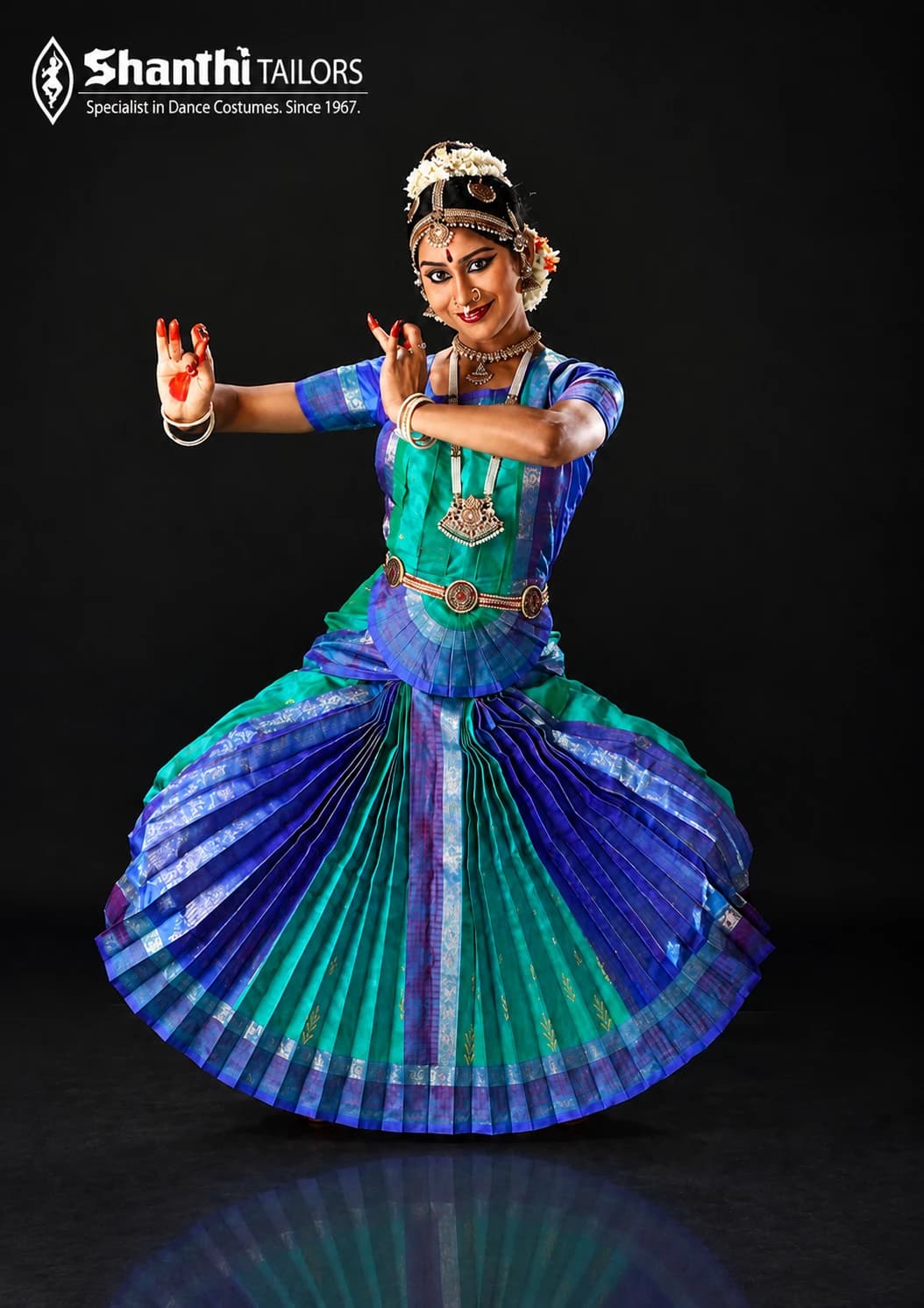
Shop this look
Shanthi Tailors Editorial
Shanthi Tailors has crafted classical dance costumes and temple jewellery in Chennai since 1967, dressing dancers for arangetrams and stages worldwide.